
ALICE: Leading Change in the AI Era
AI is changing the tools, speed, and shape of work. But it cannot make someone feel heard, explain why a decision matters, notice when a team is exhausted, repair trust, or model the behavior a change requires. That human work still belongs to leaders.
By Amanda Prochaska, Founder and Chief Wonder Officer of Wonder Services
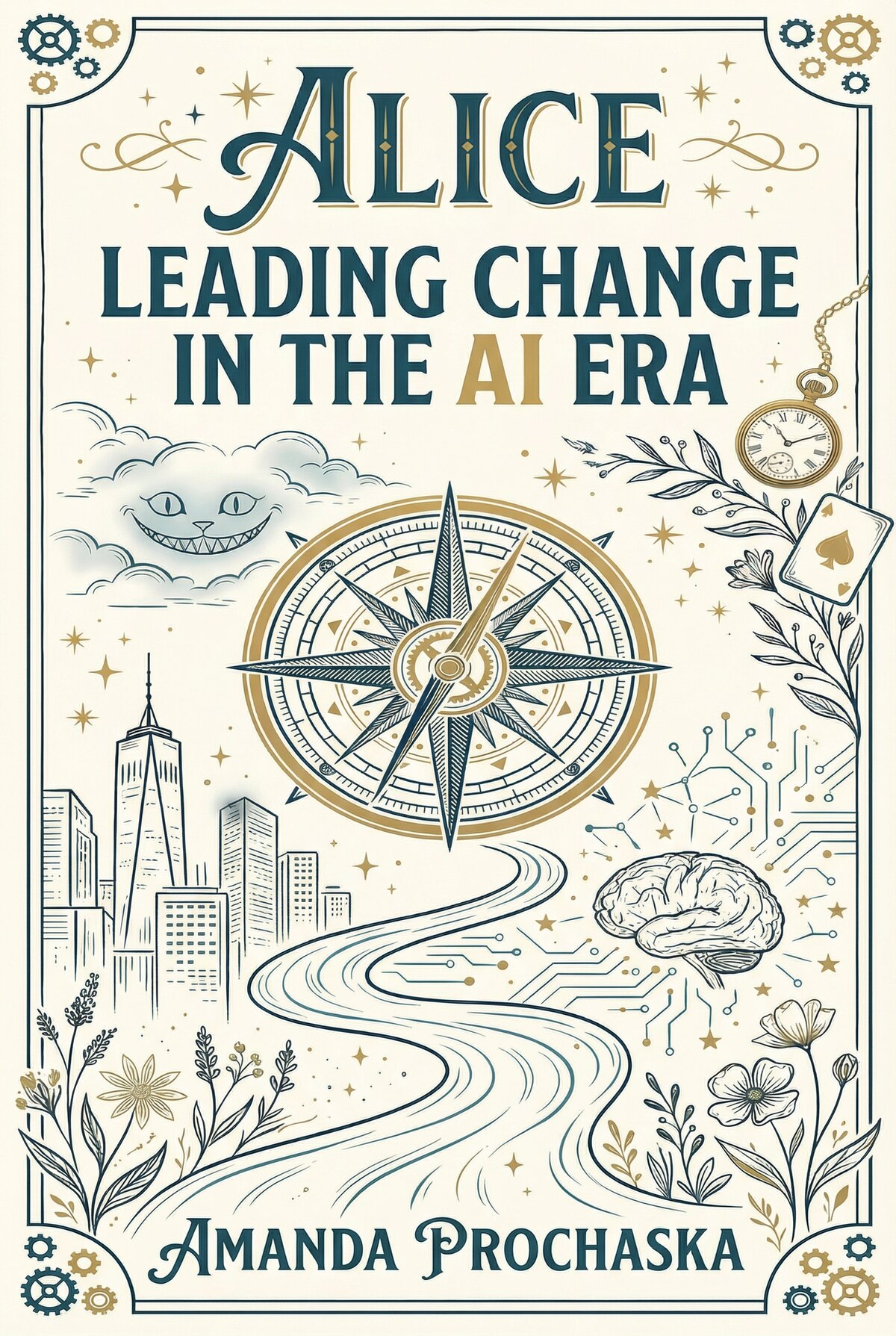
Two practical guides for leading change and scaling AI responsibly.
Reflect on the human side of change, assess five AI adoption gates, and turn the weakest point into a 90-day operating plan.
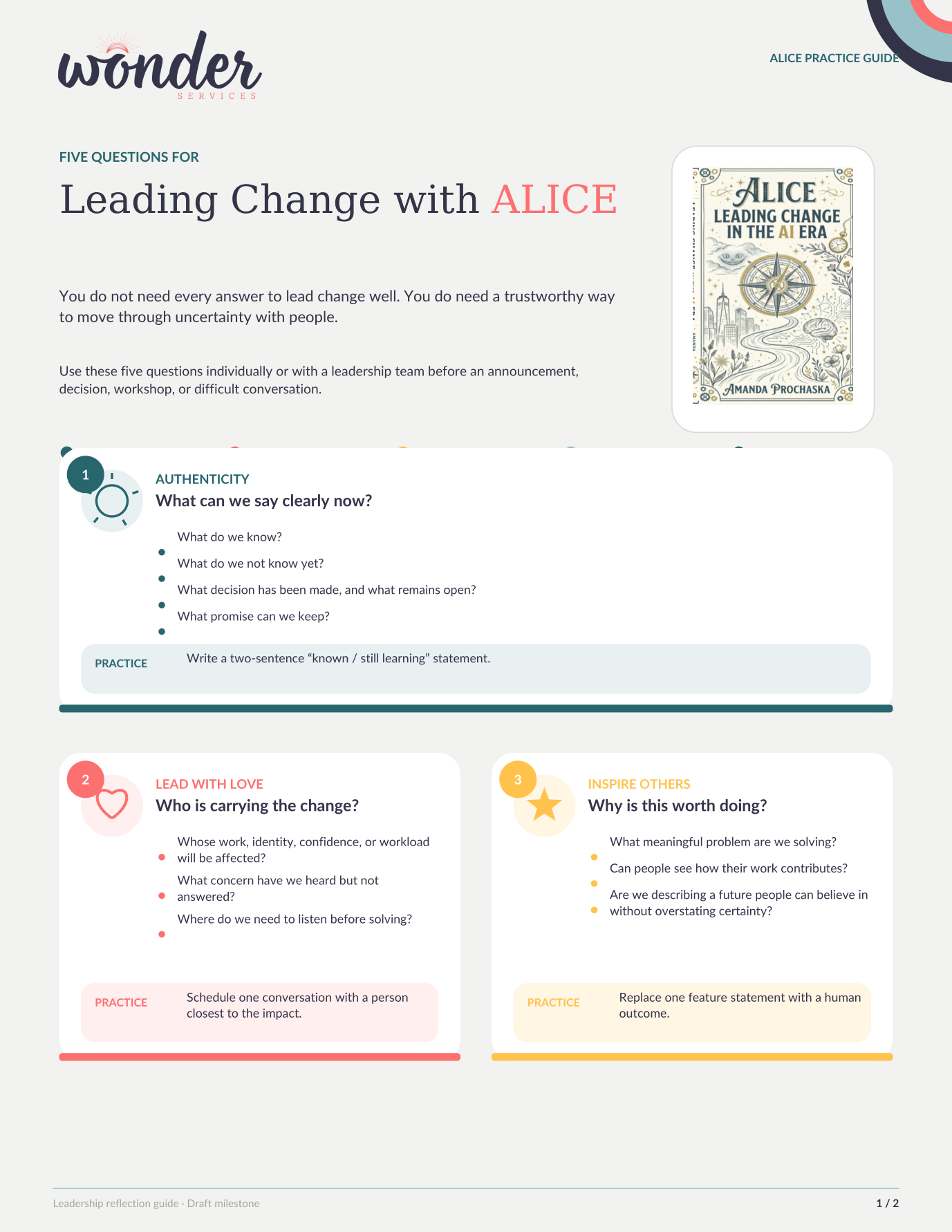
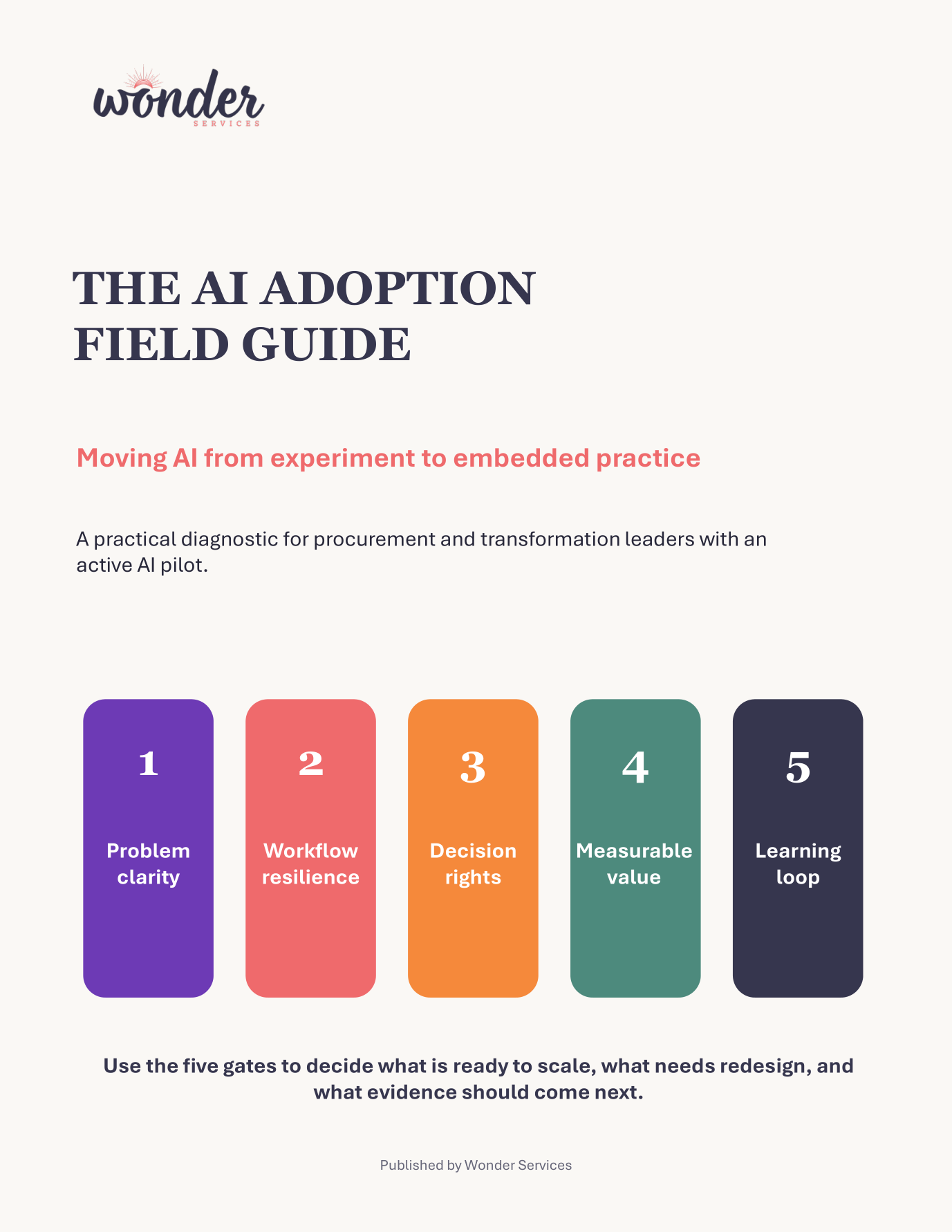
Change is accelerating. Leadership must become more human.
Leaders are being asked to understand new technology, predict its impact, calm uncertainty, create a plan, and move quickly—often while they are still learning themselves. ALICE offers a practical way to lead through that uncertainty with honesty, clarity, curiosity, trust, and meaningful human connection.
Drawing on Amanda Prochaska’s experience leading major transformations and building Wonder Services, the book blends personal stories, practical exercises, and a battle-tested leadership framework. Its central message is simple: as technology becomes more capable, the distinctly human work of leadership becomes more important.
What you will learn
Rebuild the energy required to lead sustained change.
Replace the pressure to have every answer with honest, confident leadership.
Create clarity when teams are navigating uncertainty.
Build trust and help people feel heard.
Connect change to a purpose people can understand.
Engage informal influencers and the people closest to the work.
Reinforce adoption through visible leadership behaviors.
Lead change without burning out or carrying everything alone.
The Two-Part Journey
Coming Alive
Leadership starts with the leader’s capacity to remain present, resilient, and connected. The first part of the book helps readers rediscover wonder, clarify their emotionally connected ‘why,’ restore energy, and approach change as an adventure rather than a burden.
Meet ALICE
The second part introduces a practical change-leadership framework designed for complex, fast-moving environments where sustainable transformation depends on trust, clarity, community, and daily behavior—not implementation alone.
The ALICE Framework
A — Act with Authenticity
Name what is known, what is not known, and what decision comes next. Build trust through transparency instead of pretending to have every answer.
L — Lead with Love
Ask who is carrying the cost of the change. Listen before solving, show empathy, communicate honestly, and give people the support they need.
I — Inspire Others
Connect the work to a purpose people can see themselves in. Paint a clear vision, define meaningful measures of success, and model the behavior the change requires.
C — Create Community
Invite the people closest to the work before the plan is final. Reduce isolation, build shared ownership, and create healthy places for responsibility and support to live.
E — Engage Purposefully
Identify the people with natural influence and involve them intentionally. Focus time, energy, and attention on the conversations and visible behaviors that make change real.
"None of these behaviors requires a perfect answer. They require leaders to be present, clear, curious, and consistent."
Who the book is for
- Executives leading AI or digital transformation
- Change, transformation, and program leaders
- Procurement and operations leaders
- People managers guiding teams through uncertainty
- Consultants, coaches, and facilitators
- Anyone experiencing leadership burnout or rapid organizational change
Five questions before calling AI adopted
- 1.Do users understand the decision the tool is supporting?
- 2.Is it clear where human judgment is still required?
- 3.Can people question or override an output through a defined process?
- 4.Are leaders modeling the new behavior—not only asking others to change?
- 5.Are you measuring real use and business value, not just technical deployment?
"AI adoption lives at the intersection of technology, process, data, controls, leadership, and daily behavior. Missing one of those elements eventually creates workarounds, distrust, low use, or unrealized value."

About Amanda Prochaska
Amanda Prochaska is the founder and Chief Wonder Officer of Wonder Services. Her career has included leading major corporate transformations and helping organizations navigate the human side of change. ALICE: Leading Change in the AI Era is her first book and brings together personal experience, practical leadership tools, and a belief that sustainable transformation requires leaders who listen, communicate, build trust, and help people move through uncertainty.
Lead the change without losing the humans.
Technology can accelerate the work. ALICE helps leaders create the clarity, trust, purpose, and community that make change sustainable.
Continue the conversation
Join our community of transformation leaders and receive ongoing insights on the human side of change.
Subscribe to the Newsletter