
Discover how strategic supplier engagement drives procurement technology ROI and…
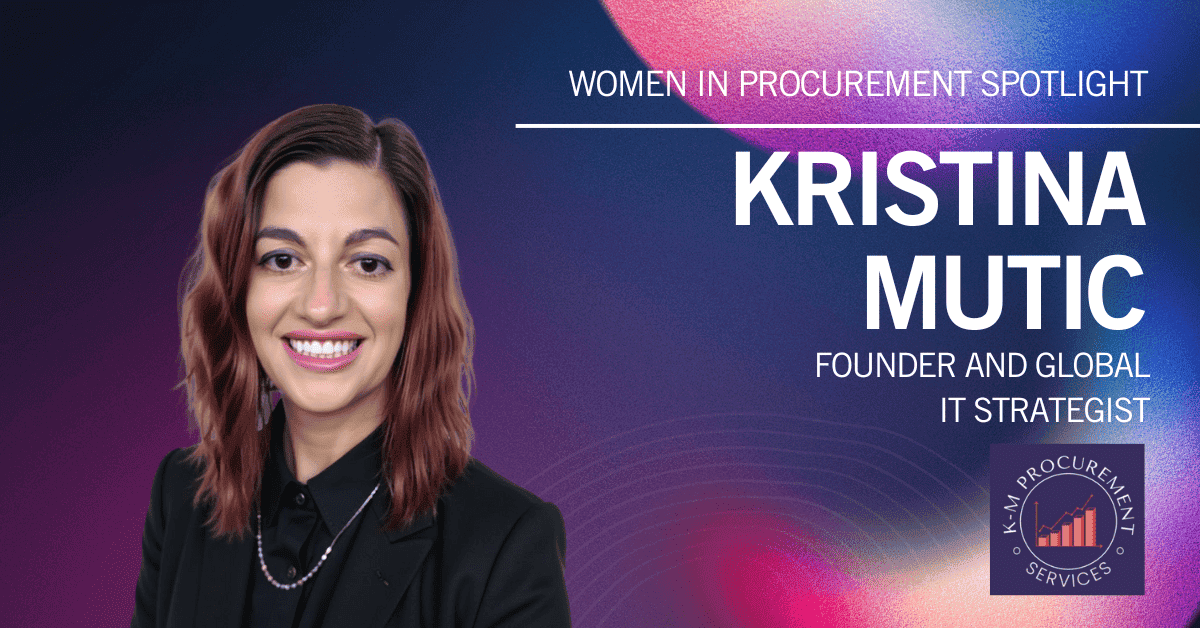
Kristina Mutic has witnessed firsthand how procurement has transformed from a transactional function focused solely on cost savings into a strategic business partner that drives innovation and organizational growth. As the Founder of K-M Procurement Services and Global IT Strategist Leading Digital Transformation, she brings over 12 years of Fortune 500 experience to help organizations navigate this fundamental shift while embracing digital transformation.
From Fortune 500 to Entrepreneurship
Mutic's journey began in the corporate world, where she honed her skills across multiple Fortune 500 companies, gaining deep expertise in strategic sourcing, ERP implementations, and IT supplier management. Two and a half years ago, she took the entrepreneurial leap to establish K-M Procurement Services, leveraging her extensive network and specialized knowledge to guide companies through digital transformation initiatives.
"I really specialize in leading companies through digital transformation and helping them with their IT strategy, IT suppliers, implementation of many different products that will elevate them to the next level," Mutic explains. Her approach is particularly valuable for organizations that need strategic guidance for specific transformation phases but may not have the resources for full-time executive-level procurement leadership.
Mutic's consulting model is built around flexibility and education. She works with companies of varying sizes, providing intensive support during critical transformation periods while ensuring their internal teams are equipped to continue the journey independently. "My goal is to educate their teams so they can take the project forward even when I leave," she notes.
Building Strategic Stakeholder Relationships
One of Mutic's core philosophies centers on cultivating deep relationships with stakeholders across the organization. She emphasizes that procurement's value extends far beyond cost management to encompass risk assessment, compliance, governance, and supplier diversification.
"Your goal as a procurement professional is that as soon as they get an idea for a new application, new product, or new innovation, they come to procurement right away," Mutic advises. This proactive approach positions procurement as a strategic partner from the earliest stages of project development, enabling better outcomes and more comprehensive risk management.
Her recommendation for organizations without formal intake processes is straightforward: implement one immediately. "Once you achieve that and your stakeholders see you as a value-adding partner, that's truly when you start to thrive."
Embracing AI and Technology
As procurement evolves, Mutic sees artificial intelligence not as a threat but as an opportunity for strategic advancement. She advocates for embracing accessible AI tools like Microsoft Copilot to streamline administrative tasks and free up time for higher-value strategic work.
"AI is here—it's no longer a future, it's actually here today," she states. Mutic encourages procurement professionals to learn prompt engineering for tasks like contract summarization, spend analysis, and renewal tracking. "This really shortens your time on administrative work because we're trying to be strategic here."
The technology adoption she champions goes beyond individual productivity. By automating routine tasks, procurement teams can lower their contract thresholds—shifting from engaging only on contracts above $500,000 to those above $200,000—thereby delivering more value across a broader range of organizational activities.
Professional Development and Networking
Mutic's career advice includes a recommendation that stands out among procurement professionals: attend at least one industry conference annually. "You'll find out about new suppliers, new technologies, emerging markets, but it also broadens your network," she explains. These gatherings provide opportunities to learn how different leaders approach similar challenges and discover innovative solutions.
Beyond formal conferences, Mutic is an active participant in meetups for remote workers and technology entrepreneurs. This networking approach has proven valuable for discovering emerging suppliers and startups that might not appear at larger industry events but could offer innovative solutions for digital transformation initiatives.
Strategic Partnership Development
One of Mutic's most compelling insights involves working with emerging technology suppliers. She identifies significant opportunities for organizations willing to partner with smaller, innovative companies as early adopters. "If you are one of the first 10 customers, you can get a really good price, fast implementation, and easier interfaces," she notes.
This approach creates a triple win: organizations receive cost-effective, tailored solutions; suppliers gain direct marketplace input for product development; and the procurement function demonstrates strategic value by identifying and nurturing these partnerships.
Managing Professional Demands
Recognizing the high-pressure nature of procurement roles, Mutic emphasizes the importance of proactive rather than reactive management. She schedules monthly stakeholder meetings to anticipate upcoming needs and challenges, enabling better resource allocation and timeline management.
Her practical advice includes setting realistic expectations: "If something is going to take six weeks, maybe tell them eight weeks and deliver in six weeks if possible." This approach accounts for the various approvals and complexities inherent in procurement projects while maintaining stakeholder confidence.
Mutic also highlights the value of partnering closely with project management offices (PMO) or vendor management offices. "When you partner together, you can set up expectations that are manageable," she explains, preventing situations where stakeholders drive strategy instead of procurement professionals.
Measuring Success Beyond Cost Savings
Traditional procurement metrics focus heavily on cost savings and avoidance, but Mutic advocates for a more comprehensive approach. She recommends tracking supplier investments such as complimentary professional services, additional licenses, or other value-added contributions.
"Make sure that you track that as well because at the end of the year you can have strategic suppliers and strategic plus-plus suppliers," she suggests. This broader measurement approach helps differentiate true strategic partnerships from transactional relationships and ensures that all value contributions are properly documented and recognized.
Industry Inspiration and Leadership
Throughout her career, Mutic has been inspired by female leaders in procurement, noting that the field offers strong representation at director level and above. She specifically credits Erin Mozer from GE Healthcare for teaching her stakeholder management and portfolio management skills, particularly in developing new talent within the procurement function.
She also highlights Amanda Prochaska of Wonder Services as an example of transformational leadership, noting how smaller advisory firms can provide significant value during specific transformation periods. Both leaders exemplify what Mutic sees as essential qualities: "leadership that uplifts others" and creates win-win scenarios for all parties involved.
The Attraction Challenge
Mutic brings a unique perspective to procurement talent acquisition, having graduated in the first supply chain class at UW Milwaukee—a program that started with just 45 students. She recognizes that engineering shortages have led to engineers filling supply chain roles, but sees this as an opportunity to attract business-minded professionals who want to think analytically without the extensive mathematical requirements of traditional engineering programs.
"You end up thinking like an engineer, but you don't have to go through all of the math classes," she explains. This positioning makes the field more attractive to business students while highlighting the strategic and analytical nature of modern procurement work.
Looking Forward
Mutic's vision for procurement's future centers on strategic value creation through technology adoption and enhanced stakeholder partnerships. She sees continued automation of administrative tasks freeing procurement professionals to focus on higher-value activities, enabling them to engage with smaller contracts and deliver broader organizational impact.
For organizations undertaking digital transformation initiatives, Mutic's blend of Fortune 500 experience and entrepreneurial insight offers a proven approach to building sustainable, strategic procurement capabilities. Her work demonstrates that procurement can become one of the most strategically valuable functions within any organization when approached with the right mindset and methodology.
The transformation of procurement from cost center to strategic partner isn't just possible—it's essential for organizations seeking competitive advantage. Mutic's insights provide both the inspiration and practical guidance needed to make this transformation successful, one stakeholder relationship and strategic partnership at a time.